

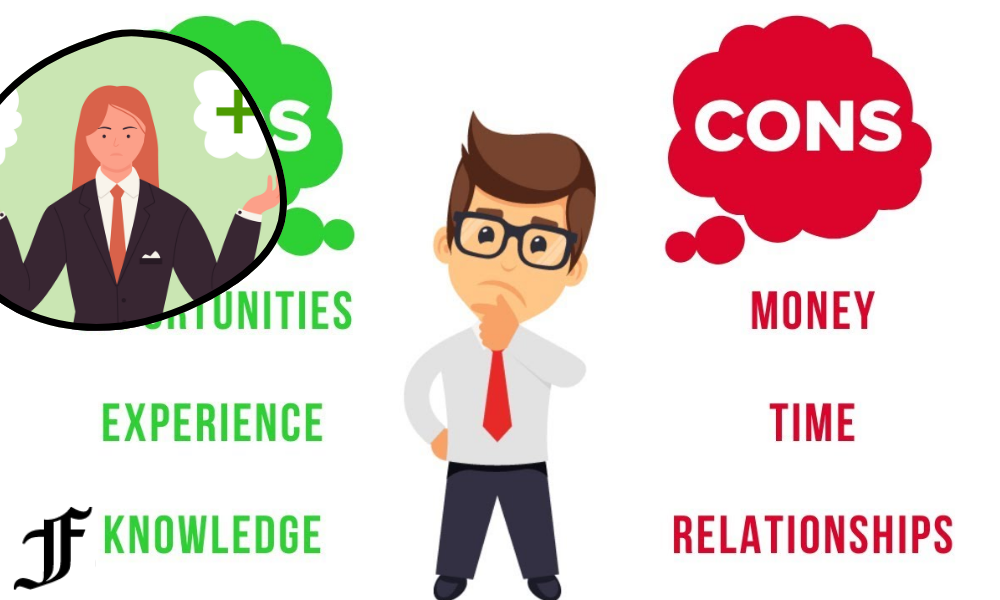
When people search for pros-cons, they are usually trying to understand one simple but powerful idea: how to compare the good and bad sides of a decision before moving forward. In everyday life, people use this method when choosing a job, buying a product, starting a business, ending a relationship, or making a major financial decision. The pros-and-cons approach sounds basic, yet it remains one of the most useful thinking tools because it helps organize confusion into something clearer and more manageable. In fact, the wider idea connects closely to decision-making, which is why the keyword continues to attract attention from students, professionals, business owners, and ordinary people who want to make better choices.
Quick Overview
| Category | Details |
|---|---|
| Focus Keyword | pros-cons |
| Meaning | A method of listing advantages and disadvantages |
| Main Purpose | To compare positive and negative sides of a choice |
| Common Use | Personal, academic, business, and financial decisions |
| Biggest Strength | Makes choices easier to understand |
| Biggest Weakness | Can oversimplify complex situations |
| Best For | Comparing options in a structured way |
| Not Ideal For | Highly emotional or deeply uncertain situations |
| Related Concepts | Decision-making, analysis, risk assessment |
| Overall Value | Helpful when used with logic and context |
What Does Pros-Cons Mean?
The term pros-cons refers to the process of looking at both the positive and negative sides of something before making a decision. “Pros” means the benefits, strengths, or favorable points. “Cons” means the disadvantages, weaknesses, or risks. This method is common because people naturally want to reduce uncertainty when they face a difficult choice. Instead of relying only on emotion, impulse, or outside pressure, they write down or mentally compare what they stand to gain and what they might lose.
This approach is popular because it is simple enough for almost anyone to use. A student may use it to decide between two universities. A buyer may use it before choosing a phone, a car, or a laptop. A family may use it when considering a move to another city. Even at the business level, pros-cons thinking plays a role in strategic planning, budgeting, hiring, and expansion. The language is simple, but the impact can be significant when the method is applied carefully.
Why People Use the Pros-Cons Method
People use the pros-cons method because decisions often feel messy in the mind. Thoughts can overlap, emotions can cloud judgment, and outside opinions can create pressure. Writing out advantages and disadvantages creates structure. It slows the mind down and turns vague worry into visible points. Once the issue is written out, a person can start to compare reality instead of reacting only to fear, excitement, or guesswork.
Another reason this method remains popular is that it gives people a sense of control. Even when the answer is not obvious, listing pros and cons can reduce stress by making the process feel more deliberate. The person may still face uncertainty, but the decision becomes more informed. That alone can prevent regret later, because they know they considered the situation seriously instead of acting blindly.
The Main Pros of Using Pros-Cons
One of the biggest strengths of the pros-cons method is clarity. Many decisions become emotionally overwhelming because everything feels tangled together. Once the advantages and disadvantages are listed, the person can see the issue more clearly. That visual or mental separation often reveals that the answer is not as confusing as it first seemed. Sometimes the pros heavily outweigh the cons. In other cases, the cons immediately show that the option is not worth pursuing.
Another major benefit is that the method is flexible. It can be used for small choices and major life decisions alike. Someone can use it in a few minutes before buying a product, or spend several days using it to think through a career change. It works in personal life, education, work, business, and even relationships. Because of that flexibility, the method has remained relevant across generations.
The pros-cons method also encourages logical thinking. Instead of letting the loudest emotion control the outcome, it pushes the person to evaluate practical points. For example, someone thinking about moving abroad may feel excited about a new start, but the cons list may reveal concerns about cost, family distance, visa issues, and career uncertainty. That does not mean the move is wrong. It simply means the decision becomes more grounded.
A further strength is that the method helps comparison. If a person is stuck between two or three options, creating a separate pros-cons breakdown for each can reveal which option stands strongest overall. This makes the method especially useful in shopping, hiring, project planning, and personal goal setting. It can also be used in teams, where different people contribute different viewpoints.
The Cons of Relying on Pros-Cons
Although the method is useful, it is not perfect. One major weakness is that it can oversimplify complex issues. Not all decisions fit neatly into short lists. Some choices involve emotion, timing, values, relationships, risk, and uncertainty all at once. In such cases, a simple pros-cons list may create the illusion of clarity without actually capturing the full picture.
Another problem is that not every pro or con carries the same weight. A person may write five pros and three cons, then assume the pros win because there are more of them. But one serious con can outweigh several minor advantages. For example, five small conveniences do not necessarily beat one major financial risk. That is why counting points alone can be misleading.
Bias is another weakness. People often make the list after emotionally leaning toward one option already. When that happens, they may write stronger points on the side they want to choose and weaker points on the side they want to reject. In other words, the list may look logical while still reflecting personal bias. This is especially common when someone wants validation rather than honest analysis.
The method can also fail in highly emotional matters. A pros-cons list may help someone think about ending a job, but it may not fully capture grief, loyalty, fear, trauma, or emotional exhaustion. Some human decisions cannot be resolved by structured lists alone. In those situations, reflection, conversation, and time are just as important as analysis.
How Pros-Cons Helps in Daily Life
In everyday life, pros-cons thinking is often used without people even realizing it. Before making a purchase, they ask whether the quality is worth the price. Before accepting an offer, they think about benefits and drawbacks. Before joining a business partnership, they consider trust, money, workload, and long-term outcomes. All of this is pros-cons thinking in action.
The reason it works so well in daily life is that it encourages pause. Modern life often pushes people toward fast decisions, quick reactions, and constant pressure. The pros-cons method interrupts that pattern. It creates a moment of thought. That pause can stop impulsive mistakes. It can also reveal hidden concerns that might not appear in the heat of the moment.
For families, this approach can be particularly useful because it supports discussion. Instead of arguing emotionally, family members can lay out reasons and concerns in a more balanced way. For example, if a family is deciding whether to relocate, one person may highlight better job opportunities while another points to the challenge of leaving relatives behind. That kind of structured exchange often leads to more honest and productive conversation.
Pros-Cons in Business and Professional Decisions
In business, pros-cons analysis plays an important role because organizations constantly face choices with financial and strategic consequences. Should a company launch a new service? Should it hire more staff? Should it invest in new equipment? Should it enter a new market? These questions require more than instinct. A pros-cons framework helps leaders compare opportunity with cost, growth with risk, and speed with sustainability.
Professionals also use this method for personal career decisions. A person considering a new job may compare salary, work culture, location, growth potential, and job security. A freelancer may weigh independence against income instability. An entrepreneur may compare the excitement of expansion with the pressure of increased debt and management complexity. In each case, the method provides order where uncertainty exists.
Even so, strong business leaders rarely stop at a simple list. They usually combine pros-cons thinking with data, projections, legal review, and market research. That shows the real truth about this method: it is powerful as a starting point, but it becomes strongest when paired with deeper analysis.
Pros-Cons in Relationships and Personal Choices
One of the most sensitive uses of the pros-cons method appears in personal life, especially in relationships. People often try to list the good and bad sides of staying in a relationship, getting married, having children, moving closer to family, or changing major life habits. This can be helpful because it reveals patterns that emotions sometimes hide. A person may suddenly see repeated stress, lack of trust, or long-term incompatibility more clearly once it is written down.
Still, this is also where the method becomes more delicate. Human relationships are rarely mathematical. Love, attachment, history, and hope can all distort judgment. A short list may not reflect emotional complexity. That does not make the method useless, but it does mean people should be careful when using it in deeply personal areas. The list should support reflection, not replace it.
The Best Way to Use a Pros-Cons List
The best way to use a pros-cons list is to go beyond surface-level thinking. Instead of writing generic points like “good salary” or “bad location,” it helps to be specific. A stronger version would say “salary is 30% higher, which improves monthly savings” or “location adds two hours of daily travel, reducing family time.” The more concrete the points are, the more useful the final comparison becomes.
It also helps to rank importance. Not every item matters equally. Some people assign weights to each point, while others label them as minor, moderate, or major. This makes the method more realistic. A serious con such as legal risk, health harm, or financial instability should not be treated the same as a minor inconvenience.
Another useful practice is to revisit the list after some time. Immediate emotions can distort judgment. Looking again the next day or next week often reveals whether the earlier analysis was balanced or emotional. In some cases, discussing the list with a trusted person can also expose blind spots.
Common Mistakes People Make With Pros-Cons
A common mistake is using the method only to justify a decision that has already been made emotionally. In that situation, the list becomes a performance rather than a tool. The person is not really analyzing. They are simply collecting reasons to support what they already want. This weakens the value of the entire process.
Another mistake is focusing only on short-term pros and ignoring long-term cons. Many bad decisions feel attractive in the beginning because the immediate benefits are obvious. The costs appear later. For instance, a cheap product may save money today but create recurring repair costs over time. A high-paying job may look like a major pro until burnout, instability, or toxic culture becomes clear.
People also make the mistake of ignoring uncertainty. Sometimes a list creates false confidence. Just because an item is written down does not mean it is certain. A “pro” such as future growth may be only a possibility, not a guarantee. A “con” such as temporary inconvenience may not last forever. Good pros-cons thinking requires honesty about what is known and what is assumed.
Is Pros-Cons Still Useful Today?
Yes, the pros-cons method is still highly useful today, even in a fast-moving world filled with information and advice. In fact, it may be more useful now than ever, because people face too many options, too much noise, and too much pressure to decide quickly. A simple structured method helps cut through confusion. It remains practical because it does not require special training, expensive tools, or advanced knowledge.
However, modern decision-making is often more complex than it used to be. That means the method works best when it is treated as one tool among several. It can clarify, compare, and slow things down, but it should not always act as the final judge. For the best results, people should combine it with research, self-awareness, experience, and context.
Pros-Cons as a Thinking Habit
One of the strongest long-term benefits of this method is that it trains people to think more deliberately. Over time, it becomes less about writing lists and more about adopting a balanced mindset. A person starts asking better questions. What is the real benefit here? What is the hidden cost? What matters now, and what will matter later? This type of thinking improves judgment even outside formal decision-making moments.
That is why pros-cons remains such an enduring concept. It is not just a school exercise or a planning trick. It is a simple framework that can improve awareness, discipline, and perspective. Used well, it encourages better choices and fewer careless mistakes.
Conclusion
The idea behind pros-cons is simple, but its value remains powerful. It helps people bring order to uncertain choices by separating advantages from disadvantages and forcing the mind to slow down. That alone can improve decision-making in personal life, work, business, education, and relationships. The biggest strengths of the method are clarity, flexibility, and structure. It is accessible, easy to use, and effective in many real-life situations.
At the same time, the method has real limitations. It can oversimplify important issues, ignore emotional depth, and create false confidence if used carelessly. Not every decision can be reduced to a neat list, and not every point deserves equal weight. That is why the best use of pros-cons comes from combining it with honest reflection, good information, and thoughtful judgment.
In the end, pros-cons is not valuable because it gives perfect answers. It is valuable because it creates a better process. And in many cases, a better process leads to a better decision.
FAQs
What does pros-cons mean?
It means comparing the positive and negative sides of a decision, situation, product, or idea before making a choice.
What are the main pros of using a pros-cons list?
The biggest pros are clarity, easier comparison, reduced confusion, and more structured thinking.
What are the main cons of the pros-cons method?
The main cons are oversimplification, personal bias, unequal weighting of points, and weak usefulness in deeply emotional situations.
Is pros-cons good for major life decisions?
Yes, it can help, but it should not be the only method. Major decisions often need research, reflection, and advice as well.
Can pros-cons be used in business?
Yes, businesses often use pros-cons thinking to compare opportunities, risks, investments, hiring choices, and strategic plans.
Why is the pros-cons method still popular?
It stays popular because it is simple, practical, and useful for many different kinds of decisions.