

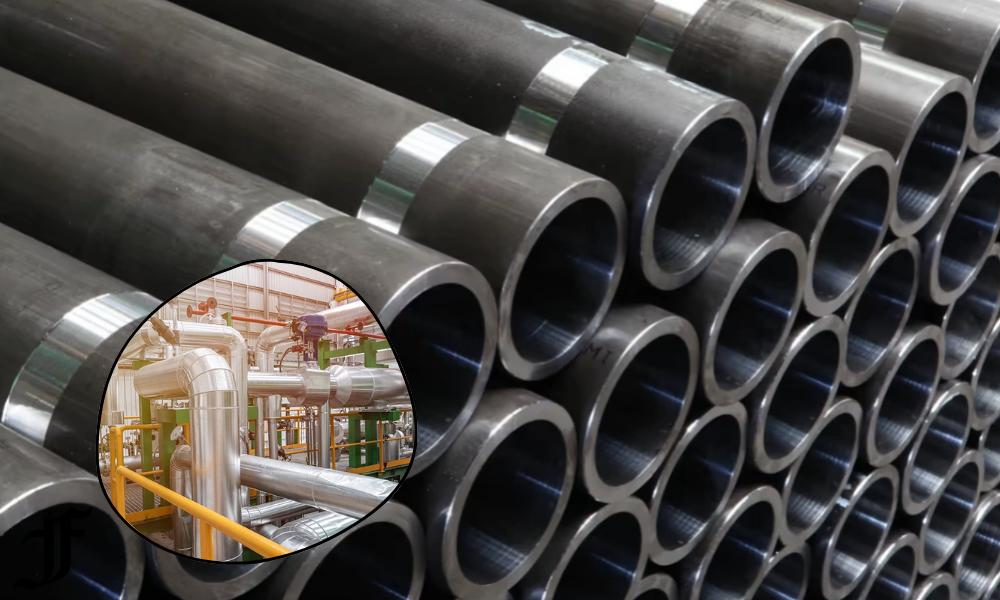
Carbon steel pipes are among the most widely used materials in modern engineering and infrastructure because of their strength, affordability, and ability to handle high pressure and temperature conditions. Industries such as oil and gas transport, water supply systems, construction frameworks, and manufacturing plants rely heavily on these pipes to ensure safe and efficient operations.
In metallurgical terms, carbon steel is a type of steel in which carbon acts as the main alloying element. The amount of carbon directly influences hardness, strength, and ductility. Manufacturers shape this material into cylindrical pipes for transporting fluids, gases, or supporting structural frameworks.
A strong balance between performance and cost makes carbon steel pipes a preferred choice in both heavy industries and commercial projects.
Quick Overview of Carbon Steel Pipes
| Feature | Details |
|---|---|
| Material | Carbon steel (iron + carbon alloy) |
| Main Use | Fluid transport, structural support, industrial piping |
| Strength | High tensile strength and durability |
| Temperature Resistance | Performs well in high-temperature environments |
| Corrosion Resistance | Moderate (needs coating or treatment) |
| Common Industries | Oil & gas, construction, power plants, manufacturing |
| Lifespan | Long with proper maintenance |
What Are Carbon Steel Pipes?
Carbon steel pipes are hollow cylindrical tubes made from an iron and carbon alloy. The carbon content usually ranges between 0.05% and 2.1%, which affects hardness and mechanical strength. These pipes carry water, oil, steam, and gas, and they also serve as structural components in construction projects.
Manufacturers produce these pipes in different grades and standards based on pressure capacity, thickness, and industrial requirements. Unlike stainless steel pipes, carbon steel pipes offer lower corrosion resistance, but they provide much higher strength and lower cost.
Types of Carbon Steel Pipes
1. Seamless Carbon Steel Pipes
Seamless pipes do not contain any welding joints. Manufacturers create them by heating solid steel billets and piercing them into a hollow shape.
Key Features:
- Handles high pressure efficiently
- Offers stronger structural integrity
- Used in critical applications
Industries such as oil refineries, chemical plants, and high-pressure systems rely on these pipes.
2. Welded Carbon Steel Pipes
Welded pipes form when steel plates are rolled and their edges are welded together.
Key Features:
- Cost-effective production
- Available in large sizes
- Suitable for low to medium pressure systems
These pipes serve water pipelines, construction work, and general industrial use.
3. ERW (Electric Resistance Welded) Pipes
ERW pipes use electric resistance welding to join steel edges.
Key Features:
- Smooth surface finish
- Uniform wall thickness
- Efficient for long-distance pipelines
They work well in structural and transportation systems.
4. LSAW (Longitudinal Submerged Arc Welded) Pipes
Manufacturers produce LSAW pipes by bending steel plates and welding them longitudinally.
Key Features:
- High strength
- Suitable for large diameter pipelines
- Used in oil and gas transmission systems
Manufacturing Process of Carbon Steel Pipes
Manufacturers follow several steps to produce carbon steel pipes:
Raw Material Selection
They select high-quality carbon steel billets or plates based on specifications.
Heating and Forming
For seamless pipes, they heat and pierce billets. For welded pipes, they roll steel plates into cylindrical shapes.
Welding (If Required)
They weld edges using electric resistance or submerged arc welding techniques.
Heat Treatment
They apply heat treatment to increase strength, hardness, and durability.
Testing and Quality Control
They perform multiple tests, including:
- Hydrostatic testing
- Ultrasonic inspection
- Dimensional checks
Coating and Finishing
They apply protective coatings to improve corrosion resistance and surface durability.
Applications of Carbon Steel Pipes
Carbon steel pipes serve many industries:
Oil and Gas Industry
They transport crude oil, natural gas, and petroleum products over long distances.
Construction Industry
They support structural frameworks, scaffolding, and building foundations.
Water Supply Systems
They distribute water in municipal and industrial systems.
Power Plants
They handle steam and high-pressure systems.
Manufacturing Industry
They support machinery and industrial processing lines.
Advantages of Carbon Steel Pipes
High Strength and Durability
They withstand heavy loads and high-pressure environments.
Cost-Effective
They cost less than stainless steel and alloy pipes.
Wide Availability
Manufacturers produce them in many sizes and grades.
Versatile Usage
They support both structural and fluid transport needs.
Long Service Life
Proper maintenance extends their lifespan significantly.
Limitations of Carbon Steel Pipes
Corrosion Risk
They rust if coatings or maintenance are not applied.
Heavy Weight
They weigh more than plastic or composite alternatives.
Maintenance Needs
They require regular inspection and protection in harsh environments.
Carbon Steel Pipes vs Stainless Steel Pipes
| Feature | Carbon Steel Pipes | Stainless Steel Pipes |
|---|---|---|
| Cost | Lower | Higher |
| Strength | High | Moderate to High |
| Corrosion Resistance | Low | High |
| Maintenance | Higher | Lower |
| Applications | Industrial, structural | Food, medical, chemical |
work best where strength and cost matter more than corrosion resistance.
Standards and Specifications
Manufacturers follow international standards such as:
- ASTM A106
- ASTM A53
- API 5L
- DIN standards
These standards ensure safety, quality, and industrial compatibility.
Maintenance and Protection
Anti-Corrosion Coating
Coatings like epoxy or galvanization prevent rust.
Regular Inspection
Routine checks detect leaks and cracks early.
Proper Storage
Dry storage prevents moisture damage.
Cathodic Protection
This method reduces corrosion in underground pipelines.
Environmental Impact
support sustainability because industries recycle steel efficiently. Recycling reduces energy consumption and lowers environmental impact compared to many synthetic materials.
Future of Carbon Steel Pipes
continue to dominate heavy industries despite competition from plastics and composites. New coating technologies improve corrosion resistance and extend service life.
Oil, gas, construction, and infrastructure industries will continue to depend on because they deliver unmatched strength and reliability.
Suggested Image Prompt
Landscape Image Idea:
“A highly detailed industrial environment showing stacked at a construction site, cranes working in the background, refinery structures, and a close-up section of a pipe showing metallic texture and thickness with realistic lighting.”
FAQs About Carbon Steel Pipes
What are carbon steel pipes used for?
They transport fluids, gases, and support structural applications in industries.
Are carbon steel pipes strong?
Yes, they offer very high tensile strength and durability.
Do carbon steel pipes rust?
Yes, they rust without proper coating or maintenance.
What is the difference between seamless and welded pipes?
Seamless pipes have no joints and offer higher strength, while welded pipes are more affordable.
Where are carbon steel pipes used most?
They are widely used in oil and gas, construction, power plants, and water systems.
How long do they last?
They last many years if properly maintained and protected.
Final Thoughts
Carbon steel pipes remain essential in modern industrial systems due to their strength, affordability, and versatility. While they require protection against corrosion, continuous improvements in manufacturing and coating technologies make them even more reliable for future infrastructure projects.
Visit for more info https://familyteethcare.com