

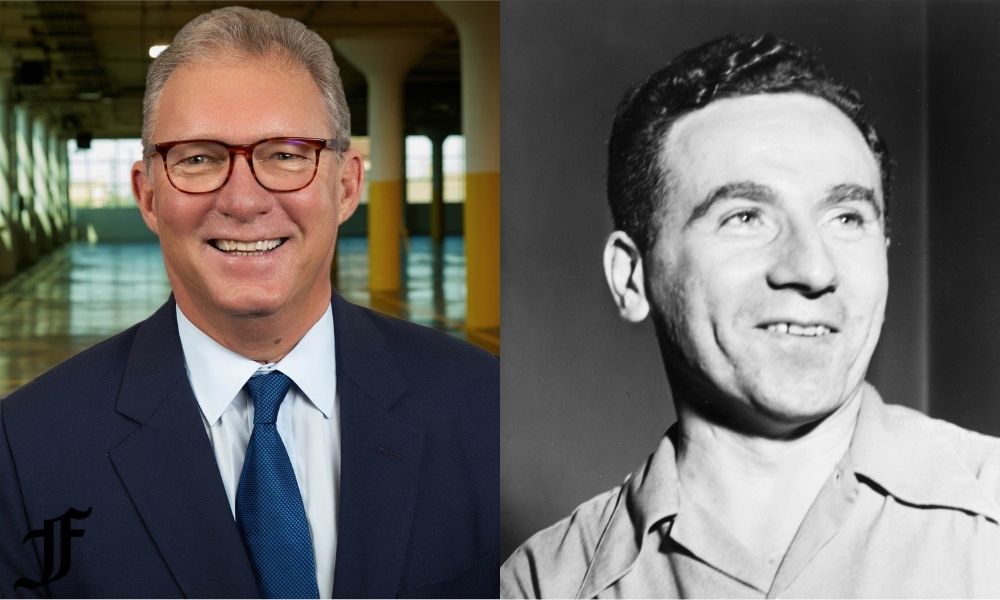
John Gates was an American journalist, political organizer, Spanish Civil War volunteer, World War II veteran, and one of the most controversial figures connected with the Communist Party USA during the 20th century. Born Solomon Regenstreif, he later became widely known as John Gates, a name tied to radical politics, Cold War prosecution, internal party conflict, and a dramatic break from communism in the late 1950s. His life story remains important because it reflects a turbulent period in American history when ideology, journalism, war, civil liberties, and political loyalty collided.
| Quick Bio | Details |
|---|---|
| Full Name | Solomon Regenstreif |
| Known As | John Gates / Johnny Gates |
| Date of Birth | September 28, 1913 |
| Birthplace | New York City, United States |
| Date of Death | May 23, 1992 |
| Known For | Communist Party USA figure, journalist, Daily Worker editor |
| Political Affiliation | Communist Party USA until 1958 |
| Military Service | Spanish Civil War and World War II |
| Major Publication | The Story of an American Communist |
| Historical Importance | Cold War politics, Smith Act case, party reform debate |
Who Was John Gates?
John Gates was a major figure in American left-wing politics during the middle of the 20th century. He became known for his work inside the Communist Party USA, his leadership role in party journalism, and his later decision to leave the movement after years of loyalty.
His story is not simple. To some people, Gates was a committed anti-fascist who fought in Spain and served in the U.S. Army during World War II. To others, he was a controversial communist organizer who defended a political system many Americans feared during the Cold War. Later in life, he became a symbol of disillusionment because he publicly rejected the party he had served for decades.
This mix of activism, controversy, service, and self-criticism makes John Gates a fascinating historical figure. He was not only a political name. He was also a man shaped by the biggest conflicts of his time.
Early Life of John Gates
John Gates was born Solomon Regenstreif in New York City in 1913. He grew up in a Jewish immigrant family with roots in Eastern Europe. Like many young people of his generation, he came of age during a period of economic hardship, political unrest, and growing concern about fascism abroad.
The Great Depression deeply affected American society. Millions of people lost jobs, families struggled, and many young workers and students became interested in radical political ideas. For Gates, this environment helped push him toward activism.
He attended City College of New York, a school known for attracting bright working-class students and politically active young people. During this time, he became drawn to Marxist ideas and joined the Communist movement. This decision shaped the rest of his life.
Why He Changed His Name
John Gates was born Solomon Regenstreif, but he later adopted the name John Gates. Political activists, writers, and organizers sometimes used changed names for practical, cultural, or political reasons. In Gates’s case, the new name became the one remembered in history.
The name John Gates sounded more American and easier for public political work. It also became connected with his journalism, party activity, military service, and later memoir.
Today, most historical references use John Gates rather than Solomon Regenstreif. However, his birth name remains important because it connects him to his immigrant-family background and early identity.
John Gates and the Communist Party USA
John Gates joined the Communist Party USA as a young man and quickly became active in political organizing. The Communist Party during that era attracted workers, intellectuals, students, labor organizers, and anti-fascist activists. It also became one of the most controversial political organizations in the United States.
Gates believed that capitalism had failed ordinary people during the Depression. Like many young radicals, he saw communism as a possible answer to poverty, inequality, racism, and war. His early activism included work around labor struggles and campaigns connected with racial justice.
Over time, Gates moved from local activism into more visible party roles. His energy and discipline made him an important figure inside the movement.
Activism and the Scottsboro Boys Case
One of the major causes that influenced many American communists in the 1930s was the Scottsboro Boys case. The case involved nine Black teenagers falsely accused of assault in Alabama, and it became a major symbol of racial injustice in America.
The Communist Party played a prominent role in publicizing the case and organizing legal defense efforts. Gates, like many party activists, became involved in movements that connected race, labor, and civil rights.
This period helped define his political identity. For Gates, communism was not only an economic theory. It was also connected to anti-racism, labor rights, and international anti-fascism. However, his later life would show that his loyalty to the party was eventually tested by its relationship with the Soviet Union and internal authoritarian habits.
John Gates in the Spanish Civil War
One of the most dramatic chapters in John Gates’s life was his service in the Spanish Civil War. In the 1930s, Spain became the battlefield between the elected Republican government and the Nationalist forces led by Francisco Franco, who was supported by fascist powers.
Many left-wing volunteers from around the world went to Spain to fight for the Republic. American volunteers served in the Abraham Lincoln Brigade, and Gates became one of them.
For many volunteers, Spain was seen as the front line against fascism before World War II. Gates’s decision to go there showed his commitment to anti-fascist struggle. It also placed him in one of the most dangerous political and military conflicts of the century.
A Controversial Role in Spain
Gates rose to a leadership position in the Abraham Lincoln Brigade and served as a political commissar. A commissar was responsible not only for morale but also for political discipline. This role made him powerful and controversial.
Accounts of Gates’s time in Spain describe him as strict and disciplined. He later acknowledged that he had been harsh in some situations. His involvement in disciplinary decisions became one of the most debated parts of his life.
This part of his biography matters because it shows the complicated nature of ideological war. Anti-fascist volunteers fought for a cause many considered noble, but internal discipline, political pressure, and battlefield fear could create morally difficult situations.
World War II Service
After the Spanish Civil War, John Gates returned to the United States. When America entered World War II after the attack on Pearl Harbor, Gates enlisted in the U.S. Army. This is an important part of his story because it challenges simple labels.
Although Gates was a communist, he also served in the American military during a global war against fascism. His service included assignments connected with the Aleutian Islands campaign, and he eventually reached the rank of first sergeant.
For Gates and many other left-wing veterans, the war against fascism was deeply personal. His earlier service in Spain and later service in the U.S. Army both reflected that anti-fascist commitment.
John Gates and The Daily Worker
John Gates became closely associated with The Daily Worker, the newspaper of the Communist Party USA. The paper was a major voice for the American communist movement. It covered labor issues, civil rights, international politics, party positions, and criticism of capitalism.
Gates became editor of the newspaper and used that position to shape political debate within the party and among its readers. Journalism gave him influence beyond organizing meetings and speeches. Through the newspaper, he could speak to thousands of party members and sympathizers.
However, this role also created conflict. As the political climate changed in the 1950s, Gates began pushing ideas that party leaders did not always accept.
The Cold War and the Smith Act
The Cold War transformed the public view of communism in America. As tensions grew between the United States and the Soviet Union, American communists became targets of investigation, prosecution, and public suspicion.
John Gates was among the Communist Party leaders charged under the Smith Act. The Smith Act was used during the Cold War to prosecute communist leaders accused of advocating the overthrow of the U.S. government. Gates and other party figures were convicted, and he spent time in prison.
The Smith Act prosecutions remain controversial in American legal and political history. Supporters saw them as a defense against subversion. Critics saw them as an attack on political belief and free speech.
Prison and Political Reflection
Gates’s time in prison became part of his political journey. Many activists who went through prosecution during the Cold War became more committed to their causes. Others began questioning the movements they had served.
For Gates, the real break came later, but imprisonment placed him at the center of America’s anti-communist era. He was no longer only a party editor. He was a national symbol in the government’s fight against communism.
This experience also gave him a deeper understanding of how political systems use power. Later, when he criticized the Communist Party and Soviet influence, his words carried weight because he had suffered for the movement he eventually left.
Crisis Inside the Communist Party
By the mid-1950s, the Communist Party USA was facing a crisis. The Soviet Union’s image was damaged by revelations about Joseph Stalin’s rule and by events such as the suppression of the Hungarian Revolution in 1956. Many communists around the world began questioning old loyalties.
John Gates became part of a reform-minded group inside the American party. He wanted a more independent, democratic, and honest movement. He believed the party needed to break from blind loyalty to Moscow and face the realities of Soviet abuses.
This position created conflict with more rigid party leaders. Gates was no longer simply defending the party line. He was challenging it from within.
Resignation from the Communist Party
In 1958, John Gates resigned from the Communist Party USA. This was a major moment in his life and in American left-wing history. He had given nearly three decades to the movement, endured prosecution, edited its newspaper, and fought for its causes. Leaving was not a small decision.
Gates argued that the party had lost its ability to serve democracy, peace, and socialism in the United States. His resignation reflected disappointment not only with party leadership but also with the broader relationship between American communism and the Soviet Union.
This decision made him a controversial figure on both sides. Anti-communists still remembered his past. Party loyalists viewed his departure as betrayal. But for many observers, Gates became an example of political self-reassessment.
The Story of an American Communist
After leaving the party, John Gates wrote about his experience in a memoir commonly known as The Story of an American Communist. The book explained his years inside the party, his reasons for joining, his disillusionment, and why he finally left.
Memoirs like this are important because they show history from the inside. Gates was not writing as an outsider who had always opposed communism. He was writing as someone who had believed deeply and then changed his mind.
His memoir helped readers understand the emotional and ideological journey of American communists during the 20th century. It also added to the larger conversation about loyalty, political faith, and personal responsibility.
John Gates After Communism
After resigning from the Communist Party, John Gates did not become a major celebrity or mainstream political star. He later worked in labor-related roles, including helping workers with claims and benefits. This later chapter shows that his concern for working people did not disappear when he left the party.
Gates’s life after communism was quieter but still connected to labor and social concerns. He had moved away from the party structure, but not necessarily from every value that had originally drawn him into politics.
This makes his story more complex. He did not simply switch from one extreme to another. Instead, he seemed to search for a more democratic and independent way to support working people.
Why John Gates Remains Historically Important
John Gates remains important because his life touched many major issues of the 20th century. He was connected to the Great Depression, anti-fascism, the Spanish Civil War, World War II, American communism, Cold War prosecution, journalism, party reform, and political disillusionment.
His story helps historians understand why some Americans joined radical movements and why some later left them. It also shows how international events affected domestic politics. What happened in Moscow, Spain, Hungary, and Washington all shaped Gates’s life.
He is not remembered as a simple hero or villain. He is remembered as a complicated figure in a complicated age.
John Gates and the Debate Over Political Loyalty
One of the central themes in John Gates’s life is political loyalty. For many years, he remained loyal to the Communist Party, even when it was unpopular and dangerous to do so. But eventually, he decided that loyalty had limits.
His break with the party raises important questions. When should a person leave a movement they once believed in? How much criticism can a political organization accept? What happens when a cause for justice becomes tied to authoritarian habits?
These questions are still relevant today. Gates’s story reminds readers that political commitment should not require silence in the face of wrongdoing.
Common Misunderstandings About John Gates
One common misunderstanding is that John Gates was only a Cold War communist figure. In reality, his life included military service, journalism, labor work, anti-fascist activism, and later criticism of communism.
Another misunderstanding is that his resignation erased his earlier beliefs. It did not. Gates’s later criticism came from someone who had lived inside the movement, not from someone who never cared about social justice.
A third misunderstanding is that his story has no modern relevance. In fact, his life remains useful for understanding political extremism, reform movements, media loyalty, and ideological change.
FAQs About John Gates
Who was John Gates?
John Gates was an American communist organizer, journalist, Spanish Civil War volunteer, World War II veteran, and former editor of The Daily Worker.
What was John Gates’s real name?
John Gates was born Solomon Regenstreif.
Why is John Gates famous?
He is famous for his role in the Communist Party USA, his editorship of The Daily Worker, his Smith Act conviction, and his later resignation from the Communist Party.
Was John Gates a journalist?
Yes, John Gates was a journalist and editor, most notably associated with The Daily Worker.
Did John Gates fight in the Spanish Civil War?
Yes, he served with the Abraham Lincoln Brigade during the Spanish Civil War.
Did John Gates serve in World War II?
Yes, he served in the U.S. Army during World War II and reached the rank of first sergeant.
Why did John Gates leave the Communist Party?
He left because he believed the party had failed to become an independent, democratic force and remained too tied to Soviet influence.
What book did John Gates write?
He wrote a memoir known as The Story of an American Communist, explaining his political journey and decision to leave the party.
When did John Gates die?
John Gates died on May 23, 1992.
Why does John Gates matter today?
He matters because his life shows the complexity of political belief, ideological loyalty, journalism, anti-fascism, Cold War fear, and personal change.
Conclusion
John Gates was one of the most complex figures in American radical politics. Born Solomon Regenstreif, he became a committed communist, fought against fascism in Spain, served in the U.S. Army during World War II, edited The Daily Worker, faced prosecution under the Smith Act, and later broke publicly with the Communist Party.
His life cannot be reduced to one label. He was an activist, journalist, soldier, prisoner, reformer, critic, and witness to some of the most intense political conflicts of the 20th century. His journey from devoted party member to disillusioned former communist makes him especially important for understanding how political faith can change over time.
For modern readers, John Gates offers a powerful lesson: history is rarely simple. People can believe deeply, act boldly, make mistakes, rethink their loyalties, and still leave behind a story worth studying.
Visit Famous Daily for more profiles of emerging public figures.